Build a scalable, high-performance data foundation

Transform your data lake into a trusted asset with clean, standardized, and AI-ready data, enabling advanced analytics and business growth at scale.

TALK TO US

Data that can power scalable enterprise transformation

Through cutting-edge data foundation services, we transform scattered, unstructured data into a high-performing, AI-ready asset that drives growth.

Enterprise-grade data foundation

We implement enterprise-ready data platforms supporting structured, semi-structured, and unstructured data, with built-in scalability, governance, and future-proof architecture aligned to business and regulatory needs ensuring secure, reliable performance from ingestion to access control.

Proven tech stack

Our data foundations are built on leading platforms like Azure, Databricks, and Google Cloud, integrated with modern technologies such as Delta Lake, BigQuery, and Spark. We help clients select the right stack and implement modular, interoperable solutions that scale with evolving data and business needs.

Accelerators for time-to-value

We use pre-built, cloud-agnostic accelerators including ingestion templates, data quality rules, transformation blueprints, and governance checklists to accelerate deployments and reduce risk, helping teams move from design to production faster.

Our offerings

Building a scalable, secure, and high-performance data infrastructure for storage, processing, and consumption.

  • Data Integration & Ingestion

    Ingest structured, semi-structured, and unstructured data from diverse sources into a central repository.
    • Stream IoT telemetry from edge devices for real-time analysis.
    • Extract CRM and ERP data for centralized reporting and decision support.
    • Process user interaction logs for behavioral analytics.
    • Consolidate batch files from internal and partner systems into cloud-based storage.
  • Data Storage & Management

    Organize and manage large-scale data efficiently, balancing performance, cost, and scalability.

    • Implement append-only storage for time-series event tracking.
    • Use columnar formats for efficient analytics on large datasets.
    • Archive infrequently accessed data using tiered cloud storage.
    • Maintain versioned datasets to support reproducibility and auditability.
  • Data Processing & Transformation

    Apply processing frameworks (e.g., Spark, SQL engines) to cleanse, enrich, and transform data at scale. Transform raw inputs using scalable processing engines and business logic.

    • Run ELT workflows to aggregate daily sales by product and region.
    • Normalize schema variations across different data sources.
    • Derive custom metrics for dashboards and KPIs.
    • Apply enrichment logic by joining with reference and lookup tables.
  • Data Access & Consumption

    Enable secure, role-based access to datasets for analytics, reporting, and AI/ML workloads.

    • Grant analysts access to curated datasets via SQL interfaces.
    • Serve structured features to ML pipelines for model training and scoring.
    • Create pre-aggregated views for operational dashboards.
    • Provide data extracts to external systems through APIs or flat file exports.

Automating and optimizing data movement and transformations for real-time and batch processing.

  • Data Source Connectivity

    Connect to databases, APIs, streaming platforms, and on-prem systems for seamless data extraction.

    • Pull structured data from relational databases on a scheduled basis.
    • Stream events from IoT devices via MQTT or similar protocols.
    • Fetch external datasets via REST APIs for enrichment.
    • Extract customer records from CRM systems to support segmentation and analytics.
  • Data Loading & Staging

    Rapidly load raw data into staging layers (data lake or warehouse) for future transformations.

    • Ingest flat files into object storage for further processing.
    • Write incoming records to a staging schema in the data warehouse.
    • Append new data to streaming topics for real-time ingestion.
    • Load change data capture (CDC) events into a structured landing zone.
  • Data Transformation & Enrichment

    Clean, standardize, and enrich data to make it analytics-ready.
    • Apply mapping rules to unify inconsistent records.
    • Format timestamps, IDs, and currency fields into standard formats.
    • Merge data with master records for enrichment.
    • Filter out invalid or incomplete records prior to downstream consumption.
  • Data Orchestration & Automation

    Coordinate, schedule, and automate complex pipelines to ensure consistent, timely data delivery.

    • Schedule daily pipeline runs for business reporting datasets.
    • Trigger workflows based on file arrival or API event completion.
    • Define task dependencies to ensure ordered execution.
    • Set up retry logic and error handling for pipeline robustness.

Enhancing agility, automation, and collaboration in data operations through DevOps-inspired methodologies.

  • Data Pipeline Automation

    Implement CI/CD-like processes for data transformations, reducing manual intervention and errors. Automate complex workflows to reduce manual intervention and improve repeatability.

    • Build event-driven ELT jobs that respond to data arrival.
    • Automate daily transformations with parameterized templates.
    • Configure pipelines to scale compute based on input size.
    • Chain dependent tasks for complex multi-stage processing.
  • Continuous Integration & Deployment

    Ensure reliable, version-controlled data updates with automated testing and deployment processes.

    • Apply DevOps practices such as version control, automated testing, and continuous deployment.
    • Track changes to SQL models and transformation logic in Git.
    • Run tests against sample datasets before production deployment.
    • Promote approved changes through environments using automation pipelines.
    • Roll back failed deployments to restore stable configurations.
  • Monitoring & Alerting

    Proactively detect pipeline failures, performance bottlenecks, and data anomalies before they impact business users.

    • Track pipeline performance and proactively detect anomalies or failures.
    • Monitor job durations and failure rates to identify bottlenecks.
    • Alert teams when a pipeline misses its schedule or fails validation.
    • Track schema changes between source and target systems.
    • Notify stakeholders when freshness or data volume thresholds are breached.
  • Cross-Team Collaboration

    Foster seamless interaction between data engineers, analysts, and scientists to improve efficiency.

    • Enable seamless collaboration between data engineering, analytics, and business stakeholders.
    • Maintain shared definitions of metrics and dimensions across teams.
    • Use shared workspaces for joint development and data review.
    • Co-author pipeline documentation and operational runbooks.
    • Align on priorities through sprint planning and backlog grooming.

Ensuring secure, high-quality, and compliant data through governance, security, and observability.

  • Data Governance & Access Control

    Define policies, ownership, and role-based access to maintain a secure and well-managed data ecosystem.

    • Define ownership, classify data, and enforce RBAC to manage access.
    • Apply RBAC to restrict access to sensitive data fields.
    • Assign data stewards for domain-level oversight and policy enforcement.
    • Maintain a catalog with lineage, metadata, and ownership details.
    • Review access logs regularly to detect unauthorized queries.
  • Data Security & Risk Management

    Protect sensitive data with encryption, threat detection, and regulatory compliance measures.

    • Protect data from breaches, misuse, and loss through layered controls.
    • Encrypt datasets at rest and in transit.
    • Mask personally identifiable information in non-production environments.
    • Apply anomaly detection to identify suspicious access patterns.
    • Enforce data retention and deletion policies to mitigate risk.
  • Data Quality Management

    Ensure data accuracy, consistency, and completeness through proactive monitoring and cleansing techniques.

    • Ensure data accuracy, completeness, and consistency through continuous validation.
    • Run validation checks for nulls, duplicates, and outliers.
    • Reconcile row counts between source and target systems.
    • Log data issues and initiate remediation workflows.
    • Score datasets on quality dimensions for prioritization.
  • Data Observability & Monitoring

    Gain real-time insights into data health, pipeline performance, and unexpected changes.

    • Track pipeline behavior, data changes, and system health to ensure trustworthiness.
    • Monitor for schema drift across pipeline stages.
    • Detect volume or distribution anomalies in high-impact datasets.
    • Visualize lineage to trace root causes of data issues.
    • Capture metadata and operational metrics for audit and optimization.

// INSIGHTS

Delivering data that drives impact.

Case Study

Enterprise Data Platform

READ MORE
Case Study

Data Ingestion system

READ MORE
Blog

MLOps — Overcoming the challenge of productizing Machine Learning Models

READ MORE

Enterprise-grade data platforms built for reliability

From integration to governance, we take a holistic approach to building high-performing data platforms that drive efficiency and AI readiness.

Accelerated implementation

Our metadata-driven ingestion framework automates Azure Data Factory and DBT pipelines, while our Adaptive Dynamic Modeling framework standardizes enterprise-wide data for faster, more reliable AI and analytics.

Holistic approach

From strategy and engineering to governance and DataOps, we take an end-to-end approach to ensure data is scalable, high-quality, and AI-ready.

Future-proof solutions

Built with cutting-edge technology and best practices, our solutions evolve with business needs, ensuring long-term security, adaptability, and AI readiness.

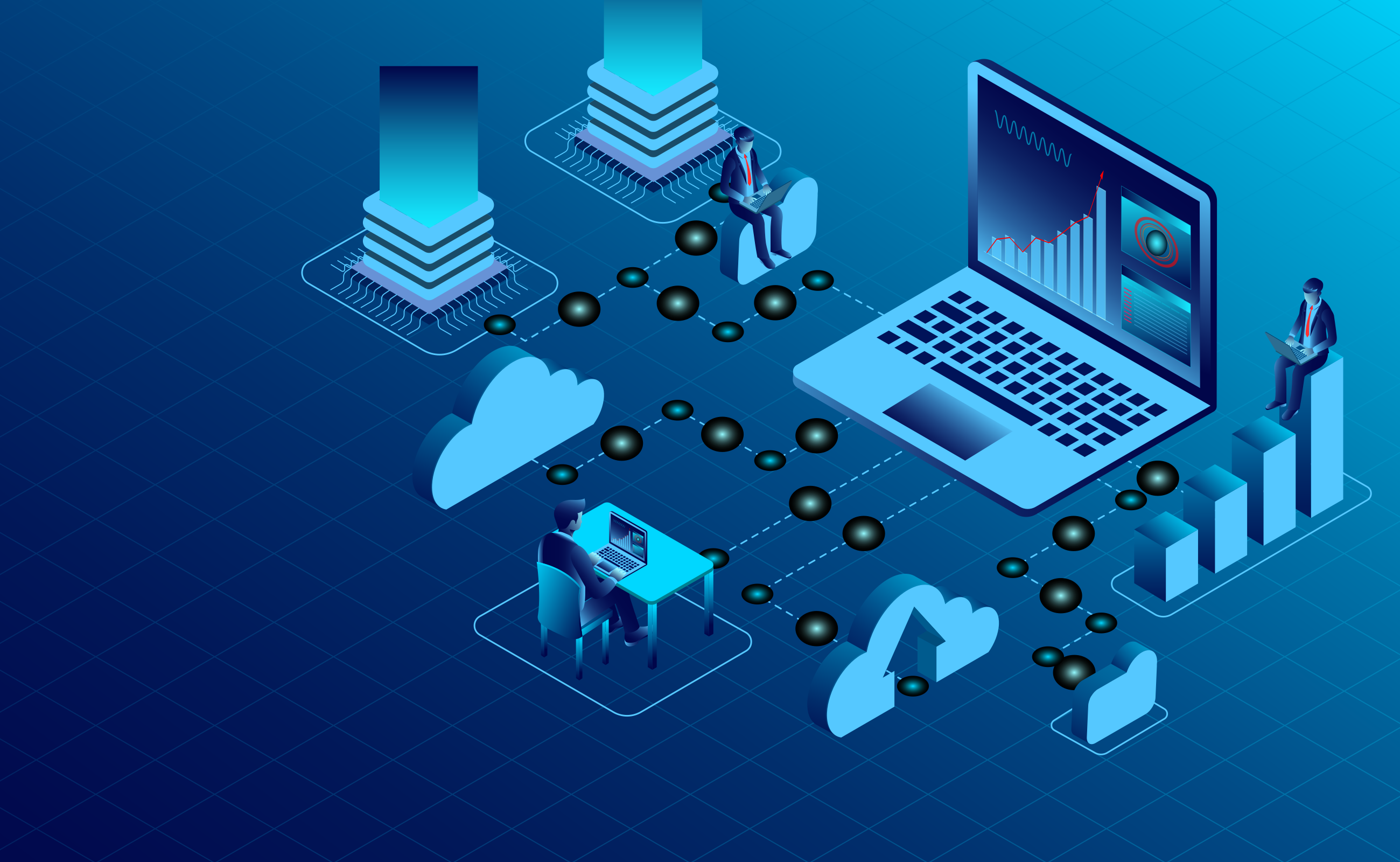
Let’s engineer your data future.

Ready to strengthen your data foundation?

TALK TO US