


Artificial Intelligence (AI) governance refers to the frameworks, policies and practices that guide the ethical and responsible development, deployment and use of AI systems. These guidelines are essential to ensure AI systems are safe, reliable and aligned with legal and ethical standards. AI is transforming industries, driving innovation, and unlocking new business opportunities. However, as AI technologies become more integrated into everyday operations, the need for robust AI governance has become increasingly critical.
AI regulation is rapidly evolving, with the European Union’s Artificial Intelligence Act (EU AI Act), passed in 2024, set to shape global AI governance. Much like GDPR’s impact on privacy laws, the EU AI Act is expected to set a global benchmark for AI regulations. With a focus on transparency, accountability, and data protection, the Act requires compliance from global companies handling EU data, with fines for violations reaching up to 35 million euros. This expansion of AI regulation is mirrored by other countries, such as China, which has introduced generative AI-specific measures and international organizations like the OECD and ISO, promoting cross-border collaboration.
To ensure responsible AI development, it is essential to adhere to key governance principles, including Transparency and Explainability, Monitoring, Accountability, Inclusivity and Bias Control, Sustainability, and Reliability, as illustrated in the diagram below.
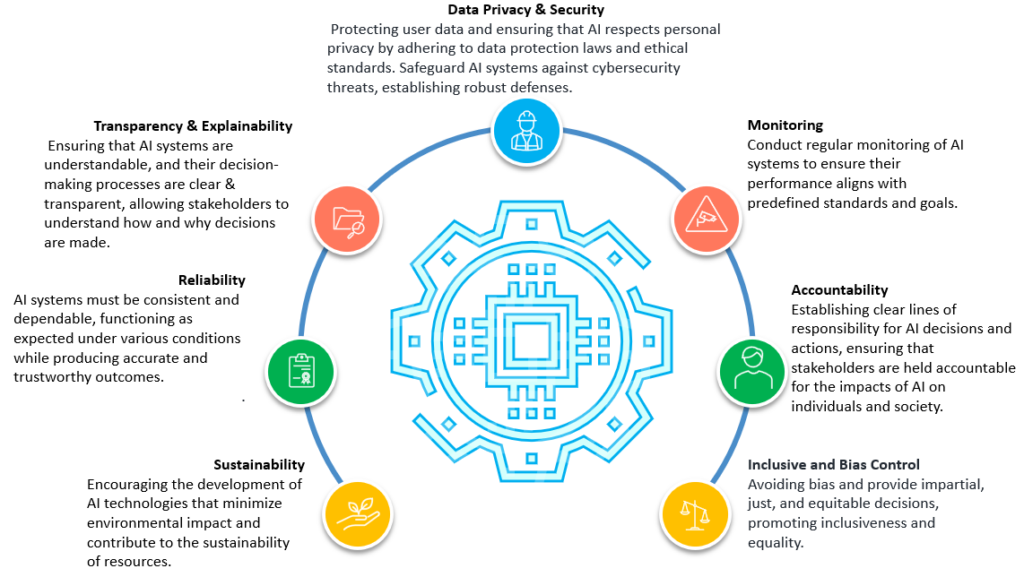
Core Principles of AI Governance
While AI offers immense potential for businesses, it also introduces significant risks. Copyright violations, data breaches, and misinformation are just a few of the challenges AI can pose. In 2023, Samsung experienced a significant data leak involving sensitive code through an AI-powered tool, highlighting the need for stringent governance to prevent such incidents. Similarly, OpenAI faced a federal lawsuit from The New York Times, accusing it of using its articles to train AI models without permission. These examples underscore the importance of establishing robust governance frameworks to mitigate risks and ensure ethical AI usage.
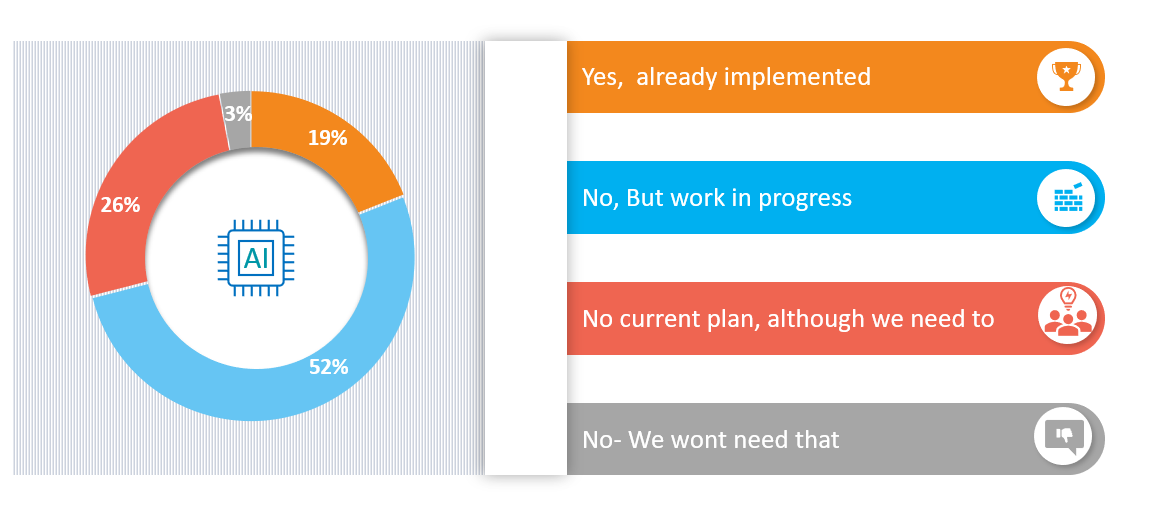
Companies that prioritize responsible AI early on will gain a competitive edge in the marketplace by fostering trust and compliance. As AI adoption continues to scale, it is clear that governance cannot be an afterthought. A recent survey by SAP LeanIX of 226 IT professionals worldwide explored how organizations are handling AI adoption and governance. The results showed that 97% recognize the need for an AI governance framework, yet only 19% have implemented one. This number rises to 32% among companies with over 10,000 employees. Additionally, 52% are in the process of developing a framework, while 26% of those who view it as essential have no plans to create or implement one.

Blackstraw distinguishes itself in the AI governance space by prioritizing data privacy, security and governance at the core of its solutions. Through advanced AI algorithms and next-generation machine learning, Blackstraw’s platform enables organizations to better understand, manage and secure their data while ensuring regulatory compliance through the following:
Blackstraw’s commitment to AI governance and security not only mitigates risks but also empowers businesses to unlock the full potential of AI while fostering growth and innovation.
As AI becomes more ubiquitous, the need for robust governance frameworks is clear. Strong governance ensures that AI technologies are deployed responsibly, ethically, and securely. Blackstraw is leading the way in making AI governance a priority, ensuring that businesses can safely harness the transformative power of AI. By establishing robust frameworks for ethical AI use, we empower organizations to innovate with confidence while mitigating risks and maintaining compliance.
AI governance is the set of policies, processes, and controls that guide how AI systems are developed, deployed, and managed responsibly. It helps organizations ensure AI is secure, compliant, transparent, and aligned with business and regulatory requirements.
AI governance is important because it reduces risks like biased outcomes, security vulnerabilities, and regulatory non-compliance. It also improves transparency and accountability across the AI lifecycle, building the trust enterprises need for broader AI adoption.
AI governance delivers trustworthy AI by setting standards for data quality, model validation, transparency, and ongoing monitoring. These practices help organizations produce AI systems that are reliable, explainable, and aligned with ethical and regulatory expectations.
Common AI governance principles include:
AI governance strengthens security by defining controls for data access, model management, user permissions, and continuous monitoring. This oversight helps protect AI systems from unauthorized access, data leakage, and model misuse, reducing security incidents and improving enterprise resilience.
Effective AI governance tools typically combine model monitoring, policy management, data lineage tracking, and audit capabilities in one platform. The right combination depends on an organization’s technology stack, compliance requirements, and AI maturity, but the goal is always end-to-end visibility across the AI lifecycle.
Data governance is the foundation of effective AI governance because it ensures data is accurate, secure, well-managed, and compliant with regulations. High-quality, well-governed data enables AI models to produce more reliable outcomes, which improves decision-making and reduces compliance risk.
Common AI governance challenges include:
AI governance improves customer trust by promoting transparency, protecting sensitive data, and ensuring AI systems operate fairly and consistently. Demonstrating strong governance shows customers that an organization uses AI in a secure, ethical, and accountable manner.
An enterprise AI governance framework starts with clear policies for data management, model development, security, compliance, and accountability. Organizations should also establish governance roles, implement continuous monitoring, and embed governance into existing MLOps pipelines to manage risk as requirements evolve.
Enjoying this article? Share it with the World


